Under Pressure
- Apr 13
- 3 min read
It is the September of 1940, France has fallen to Germany, the people caught between bombs, blitzkrieg and broken leadership. The mailed fist of fascism tightens about autonomy's throat. Those who work in cultural/national institutions find out they are to be replaced by "German-Approved" staff members.
"I feel I will go mad, literally, if I don't do something!" - A. Humbert
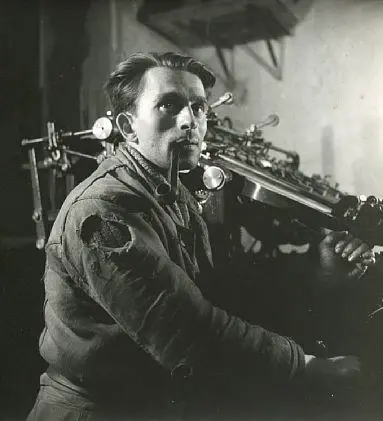
It is this tumultuous environment that caused two workers at the Musée national des Arts et Traditions Populaires, to do something incredibly dangerous, they would print restricted material. Initially these two workers, Agnès Humbert and Jean Cassou, would seize what time they had left to make use of the museums Roneo machine, a proto copier that allowed for the rapid reproduction of printed material. They would first use it to produce copies of the open letter by Paul Rivet to Marshall Petain, the core of which can be summed up in thusly; "Marshal, the country is not with you, France is no longer with you"
With this attitude they would carry on, writing tracts such as "Vichy Wages War", eventually forming a group of ten and solidifying their output under a newsletter they simply called 'Résistance'...
It would be nice if I could carry on here, writing about this groups exploits as they grew from the justified outcry of two in to the just outrage of revolution. Alas in the March of 1941, after releasing just 5 issues, the cell was betrayed. Despite doing all they could to keep publishing, Humbert was arrested and, alongside 7 others, was tried by the Wehrmacht and sentenced to death. Humbert would narrowly avoid death, but would spend the remainder of the war in forced labour, working in a Rayon factory, which was very nearly a death sentence in and of itself.
It is not a movie, doing the right thing is not always glamorous, a happy conclusion is far from guaranteed, and not everyone will be an action hero. This is the story told time and time again through the French resistance. Yes there was heroism on par with Hollywood, yes there were moments of high drama, and certainly the stakes were always elevated. But it is the acts of individuals and core groups who care for their community that were foundational for those unique moments of heroism. For without showing them what is attainable, without affirming the thoughts and bolstering the moral of the small people that make up the mass of any nation, one cannot effectively resist. And conversely if a population has a sense of unity, an outlet that reaffirms the commonality of resistance, a sense of hope... well then that population will resist an invader till the very last.
Make no mistake the ink secured to supply to resistances printing presses was just as vital to Frances liberation as the bullets given them. Without the networks of information built by journalists, artists and everyday people the resistance could not know of itself, it would be a hundred individual thoughts trapped and feeling powerless in their forced isolation. Without this network allied troops would not have gathered vital information about the position of the enemy. Without a population still buoyed by hope liberators would not have found such support as they arrived in those towns.
This is the real affect of resistance. By the end of the war some Resistance publications had hundreds of thousands of subscribers. No one called them "slactivists" no one said "oh but you're just copying leaflets" because everyone understood what those leaflets had meant, both as covert vehicles for information, and core tenants of supporting morale and growing the movement.
So if you feel under pressure, a pressure so great you just have to act as Agnès Humbert did in 1940. Remember you can. You do not need to secure a printing press from a museum, your supplies are nigh on unlimited, today you can write, you can republish, you can create, retweet, amplify and form networks of support and resistance, all from 6 inches of glass in your pocket.
You can do this, we will do this, nothing is as strong as the truth of the people, for good or ill, and we have all had quite enough of illness.


Comments