Photography : The Preservation of Time & Self
- Jun 18, 2025
- 3 min read
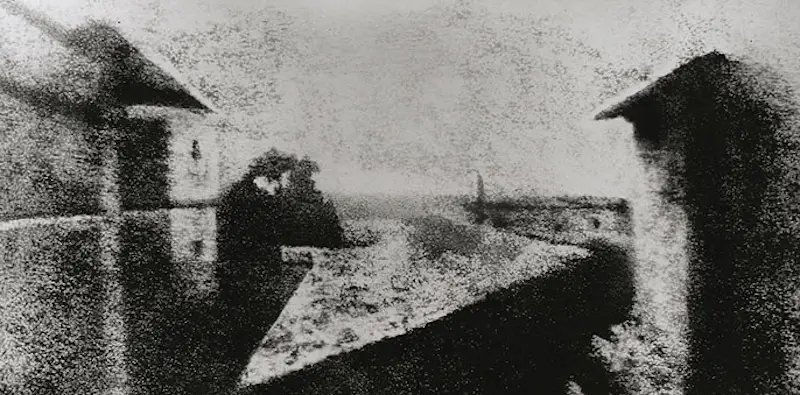
Nearly 200 years ago, Joseph Nicéphore Niépce created what is widely believed to be the first photograph, titled "View from the Window at Le Gras."
Using a camera obscura and a metal plate coated in bitumen, he captured the image over an exposure time of around eight hours i believe.
And 200 years from now, long after we are gone, we would be extremely fortunate to have our brief time on this earth preserved through the lens of a camera.
When we think of preservation or legacy, outside of the writing, is there any other form of preservation or documentation more inherently powerful than photography? A single frame can outlast generations, carrying the emotional weight of the moment of permanence captured.
Those who know me or are familiar with my work shouldn't be surprised by how deeply I love photography. It has led me to some of the most unforgettable moments and places in my life. It has taught me patience, the importance of the mundane, and a greater appreciation for time itself.
Photography has reshaped how I understand nuance and depth in art. The narrative potential of an image, the sheer volume of feeling, story and mystery it can contain, is staggering. Entire worlds can be conveyed within a single frame. Its one of the reasons my desire to be a filmmaker slowed down in place of becoming a photographer.
We often take for granted the degree to which photography has altered human perception. It has transformed how we view beauty, how we interpret time, space, and form, and how we relate to both ourselves and the world around us. It has allowed people from every corner of the globe to connect and to explore the mysteries within everyday life.
It also stands as a form of democratized memory in history. Photography places the power of documentation in the hands of everyday people, not just historians or institutions. It allows individuals to record their lives and their experiences, which in turn helps shape the preservation of culture through personal perspective.
Throughout history, photography has been a catalyst for change and activism. It has unveiled injustice, the horrors of war, poverty, and highlighted protest, giving n a face to resistance. From the Vietnam War to the Civil Rights Movement, I truly cannot imagine the state of our world without photography in the hands of people.
But beyond preservation and protest, there's also the act of expression itself as art. Photography for better and worse (Depending on your perspective) isn't reserved for the elite or the formally trained. The possibilities belong to everyone. It offers a space for the unheard to be heard, for the unseen to be seen, and for the overlooked to carve out meaning in a world that doesn't even know they exist.
Photography allows us to say, this is what I saw, this is what I felt, this is what it meant to be me, here & now.
That act of showing others the world through our eyes is immensely powerful.
The camera, for many, becomes more than a tool. It becomes a voice. A means of reclaiming authorship over our own story. It is a way for people to speak and form their own visual language, to take up space in history through expression without asking for permission.
Photography has also become a tool for personal exploration. It gives us a way to redefine who we are and how we see ourselves and to push through the boundaries of insecurity. With a lens, we can sometimes see ourselves more clearly than we ever could in a mirror.
I want to say that when I take a photograph, the world stops me for a moment, but I don’t think that’s right, I think it would be more accurate of me to say that when I take a photograph, I stop the world.


Comments