AI EVOLUTION: An Avant Scene Case Study
- info56598806
- Aug 30, 2025
- 6 min read
Where my last article talked about the foundations of the avant scene in regard to it’s genesis from Milady and the Hashlips layered and ‘Traitmaxxed’ aspects of their design process and aesthetics, there is another facet to the scene in the form of AI works.
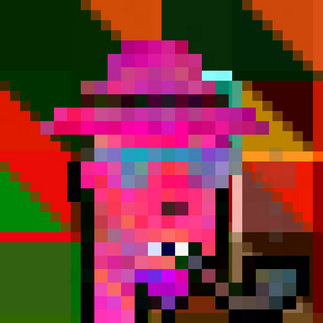
Quoted as an original inspiration for Bosch of Little Swag World, and cited as a precedent in the Avant NFT Wave by Charlotte Fang, let me introduce J48BAFORMS: an incredibly important collection by Grotto Labs that was a pioneering use of AI in art. 1000 hand-drawn images were fed into a GAN (Generative adversarial network) AI that then generated more images based on the originals. The outputs are fascinating, especially as the 1000 hand-drawn images are a part of the total collection of 4848. At first glance it’s hard to tell which are hand-drawn and which aren’t, as many of the generations seem to follow the flow of the originals. Spiky faces, beak like noses, strong collars and odd hats are the main through-line, but the more you look the stranger they become. Eyes appear like crowned jewels across foreheads; multitudes of mouths spawn on the back of necks; ears are sometimes the only facial-feature visible.



J48BAFORMS were inspired by ‘BASTARD GAN PUNKS’, a series of over 10,000 images created with the same GAN process as J48BAFORMS, but using the original Crypto Punk traits as the base. The output is a strange, hazy wasteland in the form of pixel-art PFPs. There’s vibrant greens that make you think of toxic waste; accessories that seem to be taken from dying patients and pirates; the solid colour backgrounds of the original punks are corrupted and frayed.



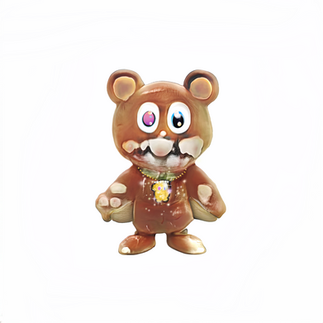
Bosch, one of the most important artists working on-chain and a key figure in the avant/gay scene, was also inspired by the above two collections. This week his first collection turned 4 years old. It uses the same GAN AI we talked about above, taking a dataset of toys to create a set of figurines that look somewhere between melted plastic, waxy and hardened ceramic. You can clearly see elements of GoGo Crazy Bones, Pokemon and Pikmin characters throughout the generations, as well as having a physical quality that summons a nostalgia for a 90s childhood. Going further than just accepting the outputs as they were, each one was hand-curated and edited by Bosch and his brother. There’s two sets, and all of the different mons that were generated were given their own names. Characters include Omom (my favourite from gen1), Ye (a Kanye West Bear styled figurine), BNK Bot and GANthrax: they are names and images that pay homage to the role that general pop culture had in the conception of the work, as well as showing off some of the original training data and referencing the technology itself. These two collections are a very clear genesis point for much of Bosch’s creative output, from using the different generations as pieces in his chess-like game ‘Super Metal Mons’ (the same name as these collections) to making them into physical ceramic collectibles.




The above works were made in 2021, the year that OpenAI’s DALL-E came out, which was many peoples first introduction to AI image generation. It was however the following year that AI images really exploded, with the introduction of DALL-E mini. OpenAI’s software was heavily guarded with long waitlists, and was certainly not easily accessible to the general public. This changed with Boris Dayma’s attempt at re-creating the software via DALL-E Mini, which was made free, open-source and extremely easy to use. The outputs were striking, horrible and weird. Faces blend into backgrounds of nothingness; void people spawn from the shadows; anything attempting to be cute became terrifying. All of this made it an immense success – the memetic power of being able to type any idea into the app and quickly receive the cursed results spawned tons of memes, as well as debates on what the future would hold for images online.

Where tastefully aesthetic glitches rein supreme in the above collections, all of them working in different ways as a time-capsule of a technology in it’s early days, AI image generation quickly transformed to a place where higher quality generation was possible. Bosch’s collection Little Swag World moves past the uncanny and creates something totally beautiful and fresh – toys as avatars, a combination of a sort of Hype Beast Funko Pop and Collectible Figurine aesthetic; plastic while never feeling cheap; dripped out in the finest of fits; Mons as sidekicks; Bacon paintings for background framing.
A huge step up aesthetically from his previous Mons, the process was far more complicated. Bosch tells me that ‘around that time I was making these figures and emoji heads with stable diffusion, and was wondering if there was a way I could control a character more by using nft layering stuff and then shooting it through stable [diffusion]’. The images attached show two of these figures and two early tests from this process that would eventually lead to LSW. Unlike the previous collections where GAN AI was used to create the entire image, this time Stable Diffusion was used to create the individual traits, which allowed for the characters to be slowly built up by a series of generated clothing, accessories, facial features and backgrounds. These were compiled together using bueno dot art (a program with similar functionality to Hashlips), allowing for repeated traits to show up. The different trait combinations result in each generation having it’s own unique style and persona: like clicking the ‘randomise’ button on a swagged out RPG character creator, where every time you click you get someone that looks cool and worth playing as. The consistency of the projects aesthetic is achieved through the most important part of the process: AI upscaling is used after the individual traits have been put together, resulting in the disparate traits merging into one fully cohesive figurine.


AI here is not used as a sort of experiment in the technology, but as a very powerful tool for creating a world. Little Swag World has been a power-house collection for our scene, with a cult following and a relatively stable and high floor price (albeit, it’s still massively underrated at 3~ SOL). It’s paired with the $SWAG coin and got some serious press via the Instagram main account.
Bosch is immensely gracious with his knowledge, being one of the few artists in the scene who frequently creates threads documenting his process and practice. He fully explains how his collections are made on the timeline, as well as his ceramics, and holds a stead-fast belief in LSW and $SWAG being soon to have it’s time in the sun.
The above collections are exemplary works in AI art from the Avant/Gay scene, and there has continued to be plenty of interesting pieces being made this technology. Sally Sandwich began by training AI LoRa’s (a way of customising AI models like Stable Diffusion using your own training data for desired aesthetics) on the Mifella collection, resulting in warped, painterly collages - ghostly renditions of the original art. This transformed into a collection of abstract AI pieces that minted out earlier this month via VVV dot so. Gremlins has been creating some of my favourite works using AI, from the BURGER FUND NFT AVATARS that used AI to create these gross, often very funny, burger-fied faces, heads and other traits, to it’s adjacent collection PERPETUAL STEW: AVATARS that used tools such as a vibe-coded AI auto-collager to make mashed up amalgamations from the traits used in the Burgers. Yesterday we saw Dido release Runway Show, where multiple LoRa’s were used to create an eclectic selection of runway show press images: photorealistic ones where the outfits and characters look to be inspired by myths and demons; gorgeously rendered paintings that flit between pure abstraction and well-executed portraiture; anime girls and Miladys on the catwalk under the bright lights.




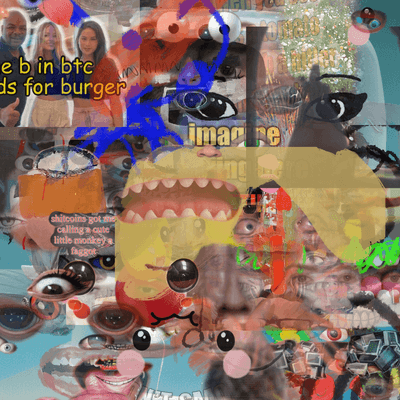




In order of appearance: Sally Sandwich 'x', Sally Sandwich 'MiFella', Burger Fund PERPETUAL STEW: AVATARS, BURGER FUND NFT AVATARS, Runway Show.
With so many ways for the technology to be used, its quickly changing nature and an amass of art being made/already having been made, I’m sure there will be updated articles by me and others in time to come. Regarding AI art as a debate: yes, there is plenty of slop, and with facts coming out like ‘57% of all web-based text has been AI generated or translated through an AI algorithm’ (per Forbes/AWS – a horrifying statistic), it’s understandable that people are skeptical and weary of the technology. However, these collections to me are examples of where AI has been used perfectly as a tool for creating genuinely creative works.
- Lowbie
Links:
J48BAFORMS: https://j48baforms.io/
BASTARD GAN PUNKS: https://opensea.io/collection/bastard-gan-punks-v2
Bosch: https://x.com/supermetalx
Super Metal Mons!: https://opensea.io/collection/supermetalmons
Super Metal Mons!!: https://opensea.io/collection/super-metal-mons-gen-2
2021 article on DALL-E: https://venturebeat.com/business/openais-text-to-image-engine-dall-e-is-a-powerful-visual-idea-generator/
Article on DALL-E Mini: https://www.sciencefocus.com/news/dall-e-mini-creator-explains-blurred-faces-going-viral-and-the-future-of-the-project
Little Swag World: https://www.tensor.trade/trade/little_swag_world
Bosch @Instagram Feature: https://www.instagram.com/p/C2KzJvNRzSF/
Sally Sandwich: https://x.com/sally_sandwichh / https://www.tensor.trade/trade/668b7c2f-f062-4242-9361-f58d9eef2854
Gremlins: https://x.com/Gremlins2Movie / https://www.vvv.so/burger-fund-nft-avatars / https://www.vvv.so/burger-fund-nft-perpetual-stew-avatars
57% of text is AI generated: https://www.forbes.com.au/news/innovation/is-ai-quietly-killing-itself-and-the-internet/
Originally published here August 30th, 2025.


Comments